A+ | A- | Reset
Advertisement
RSPB say threatened species of ground nesting birds are at risk from predators Print E-mail
Thursday, 10 January 2008
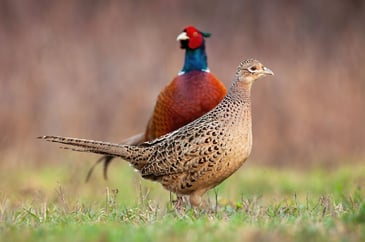
Image The Countryside Alliance and Scottish Countryside Alliance welcome a new RSPB research report which shows that breeding populations of grouse and waders are being threatened by birds of prey and other mammalian predators including foxes, stoats and weasels. The impact that this is having on these species is a growing worry if we are to conserve populations of threatened ground nesting birds, whose nests and young are most vulnerable to predation.

The report shows that the numbers of many predators of ground nesting birds, including birds of prey, have increased in the UK in recent decades, and that this is leading to a decline in breeding populations of Black and Red Grouse, the Capercaillie, and waders such as Golden Plover, Curlew and Lapwing. There are now over 1000 breeding pairs of Red Kite in the UK, and since 1991 the numbers of Goshawk have increased nearly tenfold to 410 breeding pairs. In 2004, there were 806 territorial pairs of Hen Harriers, an increase of nearly 40% since 1998. The impact of avian predation by corvids is also highlighted, with an 80% increase in the numbers of Carion Crow over the last 25 years.

Copyright the Moorland Association 

The report acknowledges that the numbers of ground nesting birds can be successfully increased by killing their predators. In one case, the breeding population of Golden Plover on a moor in North East Scotland declined to extinction when predator control ceased; the population of Lapwing, Golden Plover and Curlew have also been shown to be higher on those moors managed for grouse shooting, with significant improvements in nest survival being achieved through predator control at sites where predator densities were high. At Abernethy, a study showed that predator control successfully increased Capercaillie productivity, and as a result the RSPB has reinstated crow control there in order to benefit the population of this species; one of the fastest declining in the UK. At the launch of the Game & Wildlife Conservation Trust study Singing Fields which was launched at the House of Commons in November, the RSPB’s director of conservation, Mark Avery, told guests: “we are increasingly recognising that predators are having a greater impact on ground nesting birds and waders”.

The removal or exclusion of predators, and importance of habitat management to provide food and nest sites, can reduce the impact that predation has on ground nesting birds. Whilst the killing of predators is one option, the report acknowledges that further research needs to be carried out into the removal of predators to protect bird populations, as well as to determine the identity of key predators and their foraging behaviour. We will be questioning the RSPB over their policies regarding the reintroduction of birds of prey, and the impact that this can have on the predation burden; and how the findings in the report will affect their own Reserve management policies.

The report, The Predation of Wild Birds in the UK, can be read at: http://www.rspb.org.uk/Images/Predator%20Report_tcm9-177905.pdf


Copyright © Countryside Alliance
Countryside Alliance, company number 5227778. The Countryside Alliance Foundation, company number 5669451, charity number 1121034.
Both are Companies Limited by Guarantee Registered in England and Wales. Both registered office: 367 Kennington Road, London SE11 4PT